
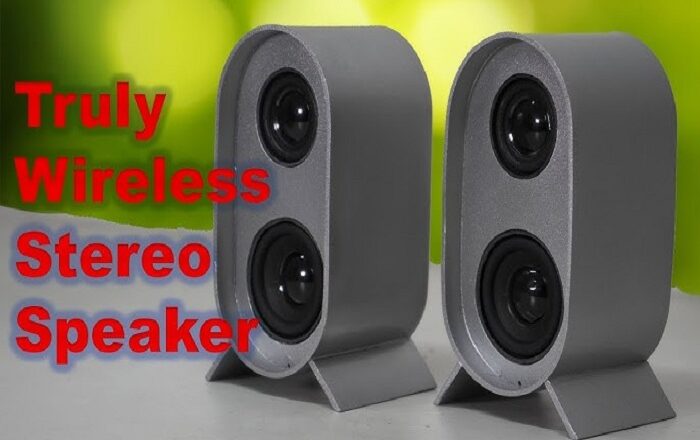
The transformation of personal audio over the past decade represents one of the most intense micro-engineering achievements in consumer electronics history. Not long ago, listening to high-fidelity audio required heavy over-ear headphones bounded by thick copper cabling, specialized external digital-to-analog converters, and dedicated amplification blocks. The idea of shrinking this multi-stage audio pipeline into an object small enough to rest unsupported inside the human ear canal seemed physically impossible.
Today, the true wireless stereo landscape has successfully solved these dimensional riddles. Modern personal audio design has progressed far beyond basic radio-frequency receivers trapped in plastic shells. By examining the micro-component engineering that defines premium wireless earbuds, we can uncover the delicate balance of acoustics, physics, and processing power required to create an immersive soundstage. Looking closely at specialized developments, such as the hardware configurations used in flagship galaxy earbuds, reveals how independent multi-driver architectures and dedicated amplification layouts are resetting our expectations for portable high-resolution sound.
The Dual-Driver Dilemma: Splitting the Acoustic Load
The fundamental challenge when designing miniature audio systems centers on the behavior of sound waves across different frequencies. Lower frequencies—the deep sub-bass and mid-bass registers—require a larger volumetric displacement of air and a wider diaphragm surface area to resonate with organic warmth. Conversely, high frequencies—the delicate treble notes of string instruments or the crisp snap of percussion—demand incredibly fast, precise transient responses that can only be achieved by ultra-lightweight, rigid diaphragms that move without physical distortion.
Read More: Flexibility on the Move: How Foldable Van Seating Improves Comfort and Functionality
Standard consumer-grade audio products try to handle this entire multi-frequency spectrum using a single, generic full-range dynamic driver. While this saves space and lowers production costs, it introduces a severe physical bottleneck. When a single diaphragm attempts to reproduce a heavy sub-bass kick drum at the same time as a soaring vocal harmony, the overlapping mechanical forces lead to intermodulation distortion, causing the music to sound compressed, muddy, and narrow.
To eliminate this bottleneck, top-tier audio platforms use a dual-driver layout that splits the acoustic duties across specialized components:
- The Expanded Diaphragm Woofer: Taking up the lower portion of the internal acoustic chamber, a newly designed wider woofer focuses exclusively on lower frequencies. By maximizing the vibration area and minimizing the speaker’s physical edge, this custom component increases its effective surface area by nearly $20\%$. This allows it to move a larger volume of air effortlessly, delivering deep, textured bass that stays separate from the rest of the mix.
- The Precision Tweeter Matrix: Positioned directly along the primary sound nozzle, a specialized high-frequency tweeter handles the upper acoustic registers. Built from ultra-rigid, lightweight materials, this component reacts instantly to delicate frequency changes, extending the high-end response up to 96kHz to capture airy, lifelike detail.
Independent Dual Amplification: Eliminating Interference
Splitting the acoustic spectrum across two separate speakers is only half the battle. If both drivers are powered by a single, shared amplifier block, the electrical signal can still suffer from phase interference and crossover distortion before the sound ever leaves the earbud nozzle.
To solve this, advanced wireless earbuds are transitioning to an independent dual-amplifier system. In this advanced configuration, the incoming digital audio stream is split into distinct high-frequency and low-frequency paths by a software-managed digital crossover framework. Each path is then routed to its own dedicated, independently controlled amplifier.
By separating the power distribution pipelines inside premium galaxy earbuds, the speakers no longer compete for electrical current. This meticulous hardware isolation drops harmonic distortion to near-zero levels. When listening to complex orchestral movements or dense multi-track recordings, every instrument retains its exact placement on the soundstage, preventing high-frequency details from getting drowned out by powerful bass lines.
The Silicon Backbone: High-Bitrate Codecs and Processing Nodes
The physical speakers and amplifiers can only perform as well as the digital data they receive. Because true wireless audio relies entirely on wireless data streams, the system must overcome the data limitations of traditional Bluetooth connections.
To deliver a true high-fidelity listening experience, modern audio ecosystems have updated their transmission pipelines to support ultra-high-quality (UHQ) audio codecs running over advanced Bluetooth 6.1 architectures. This allows the system to stream 24-bit/96kHz audio files natively without downsampling the data into lower-quality formats.
This massive influx of digital data is managed in real time by an integrated system-on-a-chip (SoC) operating alongside an advanced Neural Processing Unit (NPU). As the music streams, an Adaptive Equalizer algorithm scans the internal acoustic environment up to hundreds of times per second. By using internal microphones to measure how sound waves reflect off the unique shape of the user’s ear canal, the system dynamically tunes the equalizer frequencies on the fly, ensuring perfect audio balance even if the earbud shifts slightly out of position during intense movement.
Machine-Learned Isolation and Spatial Awareness
The modern micro-component revolution extends far beyond music playback, reshaping how these devices interact with the world around us. Housing multiple high-signal-to-noise ratio (SNR) microphones alongside an internal Voice Pickup Unit (VPU), the hardware runs advanced Deep Neural Network (DNN) voice isolation algorithms. During voice calls in noisy public spaces, the system filters out chaotic background noise—like traffic or wind—while isolating and restoring the natural warmth of the user’s voice.
Furthermore, this continuous situational monitoring introduces intelligent ambient features. When activating specialized safety modes like Siren Detect or Voice Detect, the internal processors actively analyze the acoustic environment. If an emergency siren is identified or the user begins speaking to someone nearby, the system automatically dials down the active noise cancellation and blends in ambient transparency mode, allowing the user to stay present and safe without ever needing to touch their device.
Computational Ergonomics: The Science of Comfort
Packing an expanded wider woofer, a precision tweeter, dual amplifiers, multiple microphone arrays, a high-capacity 53mAh battery cell, and a Bluetooth 6.1 motherboard into a tiny earbud shell requires immense structural planning. If the outer housing is poorly shaped, the device will cause physical ear fatigue, lose its acoustic seal, and fail to deliver its full bass response.
To optimize this physical fit, engineers rely on extensive computational design modeling. By running advanced simulations across hundreds of millions of global ear shape data points, developers can refine the weight distribution and contours of the earbud housing.
Read More: Illuminating the Uncharted: A Deep Dive into Round LED Off-Road Lights
The resulting blade design incorporates a specialized touch-and-swipe control edge along a streamlined, angled head. This structural layout provides a secure, natural fit that stays comfortable through hours of continuous use. Backed by a robust IP57 dust and water resistance rating, the hardware is thoroughly protected against sweat and outdoor elements, ensuring long-term durability over years of active use.
The New Era of Miniature Personal Audio
The rapid evolution of true wireless stereo tech highlights a major milestone in micro-scale engineering. By combining the physical power of a dual-driver system with the precision of independent amplifiers, high-bitrate 24-bit codecs, and real-time NPU audio tuning, modern listening gear proves that you no longer need large, clunky hardware to enjoy pristine sound.
As these hardware and software layers continue to blend seamlessly within modern mobile ecosystems, the boundary between a recording studio and a portable personal device will keep fading. The modern true wireless earbud has officially grown up, stepping away from its roots as a simple hands-free accessory to become a highly sophisticated, uncompromised piece of high-fidelity wearable art.