
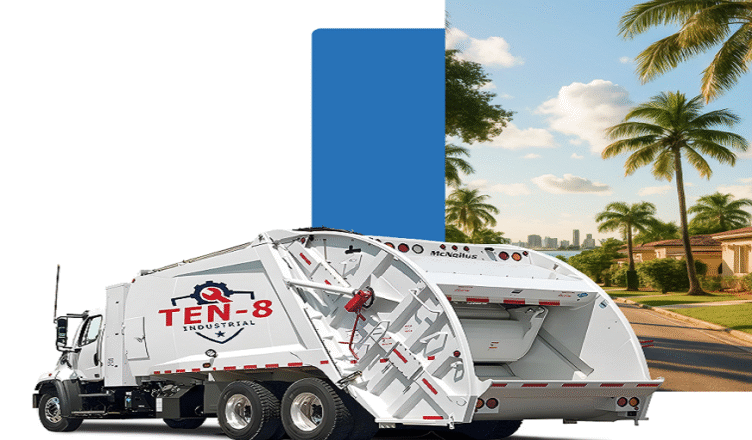
Choosing the right refuse truck is a critical decision for waste management companies and municipalities. McNeilus Refuse Trucks offer a variety of models designed to meet diverse collection needs, but two of the most common configurations are front loaders and rear loaders. Each has unique advantages, and selecting the right model depends on route requirements, waste volume, and operational priorities. With guidance and support from trusted distributors like Ten-8 Industrial, fleets can make informed decisions that improve efficiency, safety, and long-term performance.
Overview of McNeilus Refuse Trucks
McNeilus has long been recognized as a leader in refuse truck manufacturing. Their trucks are engineered for durability, advanced performance, and operator safety. High-strength steel construction, reinforced welds, and advanced hydraulic systems ensure that McNeilus trucks can withstand the daily demands of waste collection.
Both front loaders and rear loaders are equipped with innovative features, including ergonomic cabs, safety systems, and optional automation, allowing fleets to operate efficiently and safely in various environments. Ten-8 Industrial provides expert support for selecting, configuring, and maintaining these trucks to meet fleet-specific needs.
Front Loader McNeilus Refuse Trucks
Front loader trucks are specifically designed for commercial and industrial waste collection. They feature hydraulic forks at the front of the truck that lift and empty large dumpsters directly into the hopper.
Advantages of Front Loaders:
- High Payload Capacity: Front loaders can handle large volumes of waste in a single trip, reducing disposal frequency.
- Efficiency on Commercial Routes: Designed for quick loading of dumpsters, they are ideal for retail centers, apartment complexes, and industrial sites.
- Reduced Labor Requirements: Operators can load dumpsters from the cab, eliminating the need for manual handling.
- Durable Hydraulic Systems: Engineered to handle repeated heavy lifting without failure, minimizing maintenance and downtime.
Front loaders are best suited for routes that require lifting large containers quickly and safely. With Ten-8 Industrial’s support, fleets can configure these trucks for optimized efficiency and alternative fuel options to meet sustainability goals.
Rear Loader McNeilus Refuse Trucks
Rear loader trucks are more versatile and commonly used for residential and mixed-route collection. Operators load waste into the hopper from the rear, and a hydraulic packer compresses it to maximize payload.
Advantages of Rear Loaders:
- Route Flexibility: Can handle various container sizes, including residential carts and smaller commercial bins.
- Efficient Compaction: Hydraulic packers maximize payload, reducing trips to disposal facilities.
- Operator-Friendly Controls: Ergonomic designs and intuitive layouts reduce fatigue during long shifts.
- Adaptable for Mixed Routes: Ideal for neighborhoods with narrow streets or limited access.
Rear loaders are suitable for municipalities and fleets with mixed routes that require flexibility. Ten-8 Industrial assists in selecting configurations that balance efficiency, capacity, and operator safety for these environments.
Key Differences Between Front and Rear Loaders
When comparing front loaders and rear loaders, several factors help fleets determine the best fit:
- Route Type: Front loaders excel on commercial routes with large dumpsters, while rear loaders are ideal for residential and mixed-use areas.
- Payload Capacity: Front loaders generally carry more waste per trip, making them efficient for high-volume commercial routes.
- Labor Requirements: Front loaders reduce manual handling, while rear loaders may require operators to load carts or smaller containers manually.
- Operational Flexibility: Rear loaders provide more versatility for varying container types and street conditions.
- Maintenance Considerations: Both truck types are durable, but front loaders’ hydraulic lifting systems may require specialized maintenance for heavy commercial use.
By understanding these differences, fleets can choose the truck type that aligns with their operational demands, maximizing efficiency and reducing costs.
Safety and Technology Across Both Models
Both front and rear loaders incorporate safety and technology features to protect operators and improve productivity. Features include:
- 360-degree camera systems and proximity sensors for obstacle detection
- Stability control systems for safer operation in tight spaces
- Ergonomic cab design to reduce fatigue
- Telematics integration for route optimization, fuel monitoring, and maintenance tracking
Ten-8 Industrial provides fleets with technical support, parts, and training to ensure these systems operate effectively, enhancing both safety and performance across all McNeilus truck models.
Choosing the Right McNeilus Refuse Truck
Selecting between front loader and rear loader McNeilus Refuse Trucks depends on route characteristics, waste volume, and operational priorities. Municipalities and commercial haulers must consider factors such as:
- The proportion of commercial versus residential routes
- Typical container sizes and waste types
- Driver skill and labor availability
- Environmental and fuel efficiency goals
With expertise from Ten-8 Industrial, fleets can assess these factors and choose the optimal configuration for maximum efficiency, safety, and reliability.
Conclusion
McNeilus Refuse Trucks offer both front loader and rear loader models designed to meet the diverse needs of modern waste management. Front loaders excel in commercial applications with high-volume dumpsters, while rear loaders provide flexibility for residential and mixed-use routes.
Supported by Ten-8 Industrial, municipalities and commercial fleets can select, configure, and maintain McNeilus trucks to achieve long-term operational efficiency, reduced downtime, and enhanced operator safety. For any waste management operation in 2026, understanding the benefits of each model ensures the right truck is deployed for every route.